
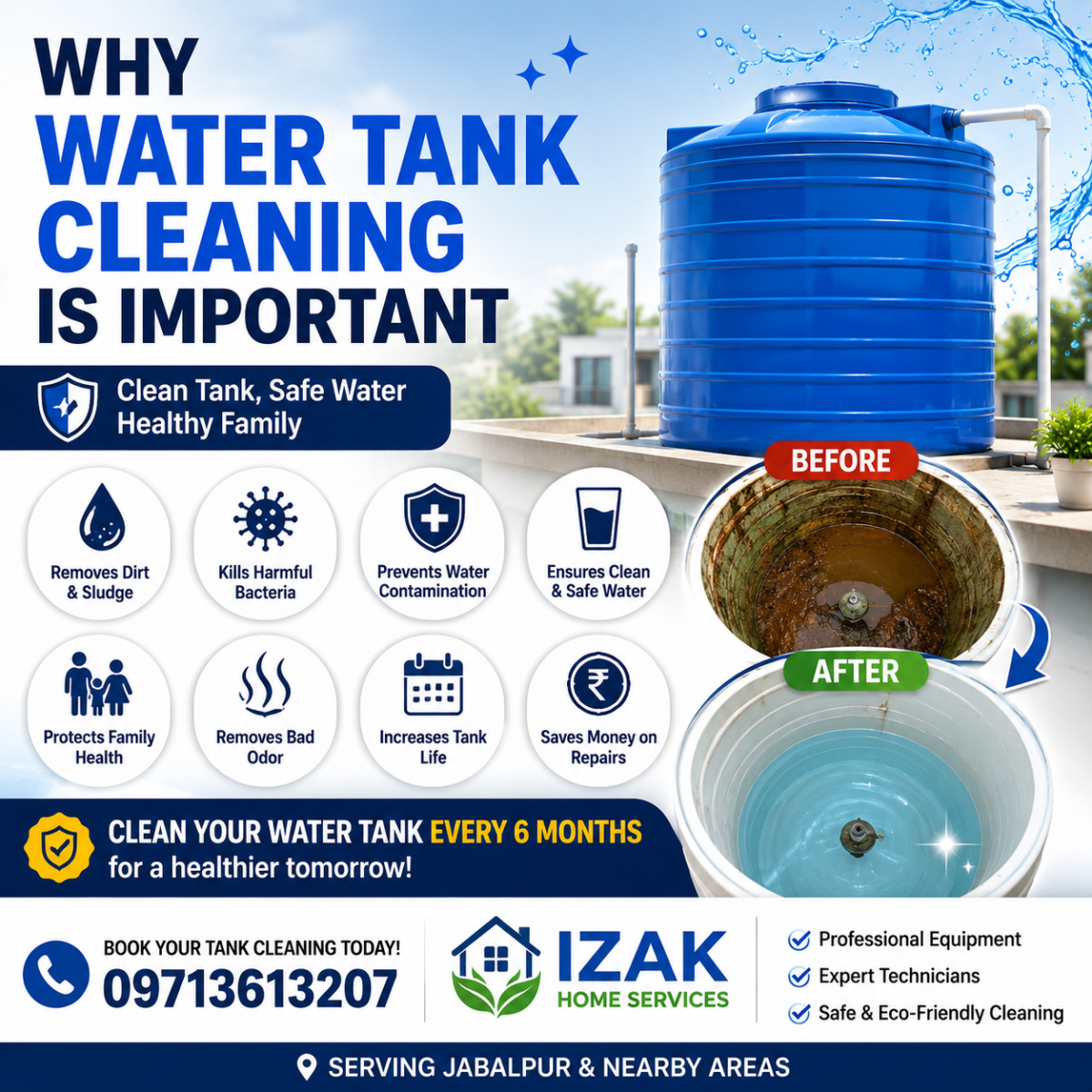
Why water tank cleaning is important: it stops bacteria, algae, and sludge from contaminating your drinking water and harming your family health.
Why water tank cleaning is important
Most of us never think about what’s happening inside our water tank. It’s out of sight — on the roof, underground, or tucked behind the house.
But that’s exactly the problem. Out of sight often means out of mind, and a tank that hasn’t been cleaned in a year can quietly turn into a health hazard.
In this guide, we’ll explain exactly why water tank cleaning matters, what happens if you skip it, and how often you should schedule it — with specific guidance for homes and businesses in Jabalpur.
Table of Contents
- Why Water Tank Cleaning Is Important
- What Happens If You Don’t Clean Your Water Tank?
- Health Risks of a Dirty Water Tank
- Common Contaminants Found Inside Water Tanks
- 10 Reasons Why Regular Water Tank Cleaning Is Important
- Signs Your Water Tank Needs Cleaning
- DIY vs Professional Water Tank Cleaning
- Professional Water Tank Cleaning Process
- How Often Should You Clean Your Water Tank?
- Water Tank Maintenance Tips
- Why Choose Izak Home Services?
- Areas We Serve
- Frequently Asked Questions
Why Water Tank Cleaning Is Important
Featured Snippet Answer: Water tank cleaning is important because it keeps your drinking water safe, protects your family’s health, and prevents contamination from sludge, algae, and bacteria. Regular cleaning also improves water quality, reduces bad odors, and extends the life of your tank.
Here’s what regular cleaning actually protects:
- Safe drinking water for your family
- Better water taste, smell, and clarity
- Protection from contamination
- Improved household hygiene
- A longer lifespan for your tank
In Jabalpur’s hot, dusty summers and heavy monsoon rains, tanks fill up with dust, debris, and runoff faster than most people expect.
What Happens If You Don’t Clean Your Water Tank?
A tank left uncleaned doesn’t just get “a little dirty.” It becomes a slow-building health hazard.
Here’s what typically builds up over time:
- Sludge buildup at the bottom from settled dirt and minerals
- Dirt and sediment washed in through inlet pipes
- Algae growth, especially in tanks exposed to light
- Rust from metal fittings and components
- Biofilm — a slimy bacterial layer coating the tank walls
- Bacteria that thrive in stagnant, unclean water
- Mosquito breeding in open or poorly sealed tanks
- Bad smell from decaying organic matter
- Cloudy water from suspended particles
Health Risks of a Dirty Water Tank
A dirty water tank is a direct health risk, not just an inconvenience.
The World Health Organization has linked unsafe drinking water to a range of preventable illnesses. The CDC notes that contaminated water storage is a known pathway for waterborne disease outbreaks. UNICEF has also highlighted that unsafe water disproportionately affects children’s health and development.
| Health Risk | Cause |
|---|---|
| Diarrhea | Bacteria and parasites in contaminated water |
| Typhoid | Salmonella bacteria from contaminated water sources |
| Cholera | Vibrio cholerae bacteria in unsafe water |
| Skin infections | Bacteria and fungus in stored water |
| Allergies | Mold and fungal spores in tank sediment |
| Stomach infections | General bacterial and parasitic contamination |
This section is for general awareness only and is not medical advice. Please consult a healthcare professional for any health concerns.
Common Contaminants Found Inside Water Tanks
Here’s what commonly ends up inside an unclean tank:
- Mud
- Sand
- Dust
- Rust
- Sludge
- Algae
- Fungus
- Mold
- Dead insects
- Leaves
- Bird droppings
- Rodent contamination
- Biofilm
- Bacteria
- Sediments
Myth vs Fact: Many people believe that if tank water looks clear, it’s safe to drink. In reality, many harmful bacteria and contaminants are invisible to the naked eye.
10 Reasons Why Regular Water Tank Cleaning Is Important
1. Improves Drinking Water Quality
Why it matters: Clean tanks mean clearer, better-tasting water. Health impact: Reduces exposure to sediment and microbial contamination. Practical example: A tank cleaned every 6 months typically shows noticeably clearer water than one left untouched for a year. Professional recommendation: Schedule a cleaning before contamination becomes visible, not after.
2. Removes Dirt & Sludge
Why it matters: Sludge settles at the bottom and mixes back into water when disturbed. Health impact: Sludge can carry bacteria and heavy sediment into your drinking supply. Practical example: Homes near dusty roads in Jabalpur often see faster sludge buildup during summer. Professional recommendation: Full drainage and scrubbing removes sludge that a simple rinse can’t touch.
3. Eliminates Harmful Bacteria
Why it matters: Bacteria multiply quickly in stagnant, unclean water. Health impact: Can lead to gastrointestinal illness and infections. Practical example: Biofilm on tank walls is a known bacterial breeding ground if left untreated. Professional recommendation: Proper disinfection after cleaning is essential, not optional.
4. Prevents Waterborne Diseases
Why it matters: Contaminated water is a direct pathway for disease. Health impact: Increases risk of typhoid, cholera, and diarrhea. Practical example: Outbreaks are often traced back to poorly maintained storage tanks, not just source water. Professional recommendation: Regular cleaning combined with disinfection significantly lowers this risk.
5. Stops Algae Growth
Why it matters: Algae thrives in tanks exposed to light or warmth. Health impact: Some algae types can produce toxins and unpleasant odors. Practical example: Tanks with cracked or loose lids let in light, accelerating algae growth. Professional recommendation: A secure lid combined with regular cleaning prevents most algae issues.
6. Removes Bad Odor
Why it matters: Odor is usually a sign of decaying organic matter or bacteria. Health impact: Not directly harmful, but a clear warning sign of contamination. Practical example: A persistent smell that returns after refilling usually means the tank itself needs cleaning. Professional recommendation: Odor should never be masked — it should be addressed at the source.
7. Increases Tank Lifespan
Why it matters: Sediment and rust wear down tank walls and fittings over time. Health impact: Indirect — a damaged tank is harder to keep sanitary. Practical example: Tanks cleaned regularly show far less internal corrosion over the years. Professional recommendation: Routine cleaning is far cheaper than early tank replacement.
8. Saves Money on Repairs
Why it matters: Neglected tanks develop leaks, cracks, and plumbing issues. Health impact: Indirect — plumbing contamination can affect water safety. Practical example: Clogged outlets from sediment buildup often lead to costly plumbing repairs. Professional recommendation: A small recurring cleaning cost prevents larger repair bills later.
9. Keeps Plumbing Clean
Why it matters: Sediment and debris travel from the tank into pipes and fixtures. Health impact: Can affect water pressure and introduce contaminants throughout the home. Practical example: Reduced water flow in taps is sometimes traced back to tank sediment, not the pipes themselves. Professional recommendation: Tank cleaning should be part of your overall plumbing maintenance routine.
10. Protects Your Family’s Health
Why it matters: Everything above ultimately comes back to one thing — the safety of the people drinking this water. Health impact: Reduces risk across all the illnesses mentioned in this guide. Practical example: Families who schedule regular tank cleaning report fewer recurring stomach issues tied to water quality. Professional recommendation: Treat tank cleaning as essential home maintenance, not an optional extra.
Signs Your Water Tank Needs Cleaning
| Sign | What It Means |
|---|---|
| Dirty or discolored water | Sediment or rust contamination |
| Bad smell | Decaying organic matter or bacteria |
| Green-tinted water | Algae growth inside the tank |
| Slime inside the tank | Biofilm buildup on tank walls |
| Low water quality/taste | General contamination |
| Visible sediment | Accumulated dirt and debris |
| Rust particles | Corroding metal fittings |
| Insects in the tank | Poor sealing or ventilation |
| Cloudy water | Suspended particles |
| More than 6 months since last cleaning | Routine maintenance overdue |
If you notice two or more of these signs, it’s time to book a professional water tank cleaning.
DIY vs Professional Water Tank Cleaning
| Factor | DIY Cleaning | Professional Cleaning |
|---|---|---|
| Cleaning quality | Surface-level, limited reach | Full scrubbing and disinfection |
| Equipment | Basic brushes and buckets | High-pressure jets and vacuum systems |
| Safety | Risk of falls, exposure to contaminants | Trained handling of confined spaces |
| Time required | Half a day or more | Faster with the right equipment |
| Disinfection | Often inconsistent | Standardized, thorough process |
| Sludge removal | Difficult without proper tools | Complete removal with vacuum extraction |
| Cost | Lower upfront | Affordable and far less risky long-term |
| Long-term value | Higher risk of missed contamination | Extends tank life and protects health |
Common Mistake: Skipping disinfection after a manual scrub is one of the most common DIY mistakes — it leaves bacteria behind even when the tank looks clean.
Professional Water Tank Cleaning Process
Here’s what a full-service water tank cleaning from Izak Home Services looks like.
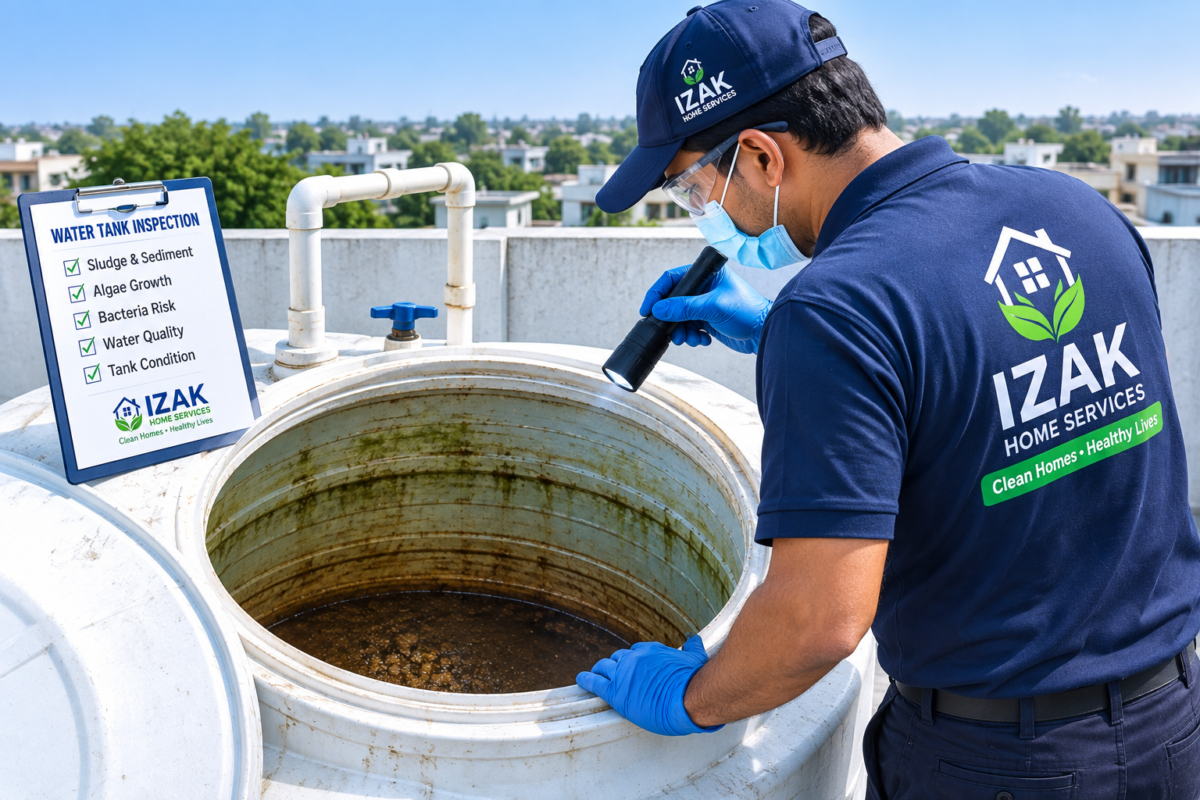
Inspection
We check the tank’s condition and identify contamination levels.
Water Drainage
The tank is fully drained before cleaning begins.
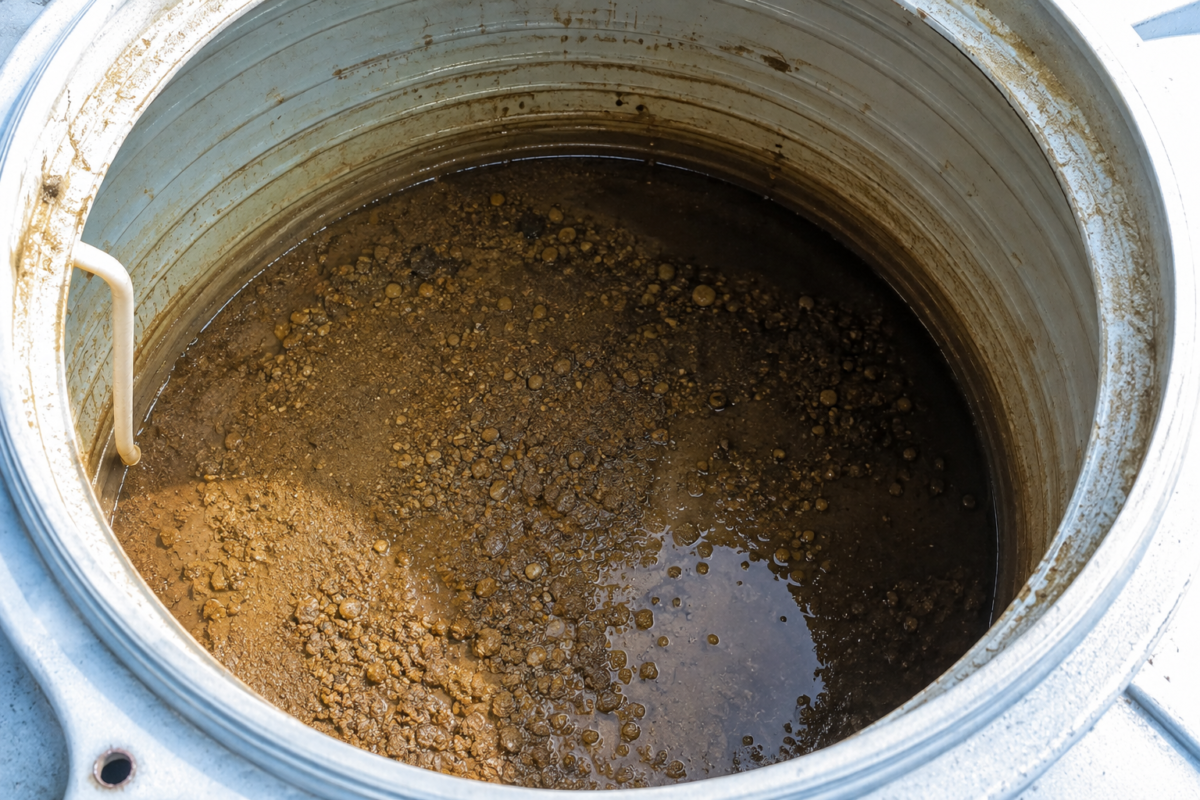
Sludge Removal
Settled sludge and sediment are cleared from the base.
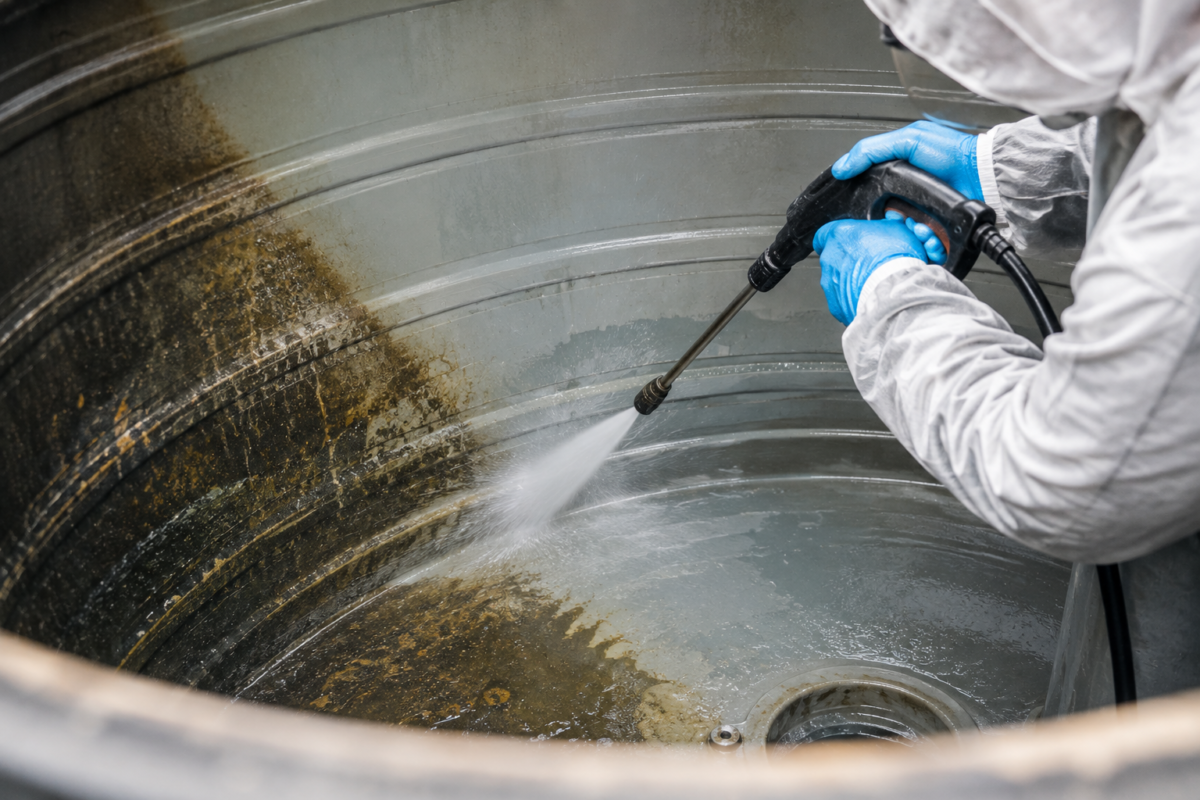
High-Pressure Cleaning
Walls and corners are cleaned with high-pressure equipment.
Scrubbing
Stubborn biofilm and algae are manually scrubbed away.
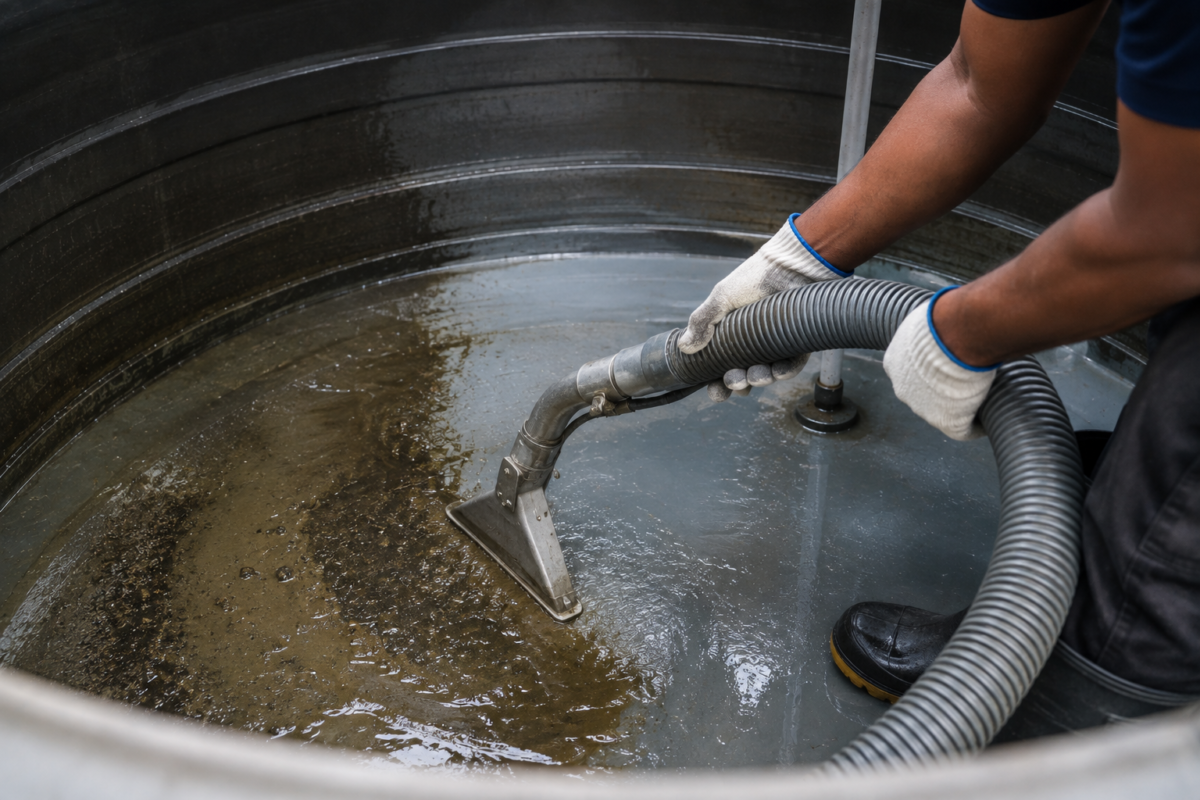
Vacuum Cleaning
Remaining debris and water are vacuumed out.
Disinfection
A safe disinfecting solution is applied to eliminate bacteria.
Final Rinse
The tank is rinsed thoroughly before refilling.
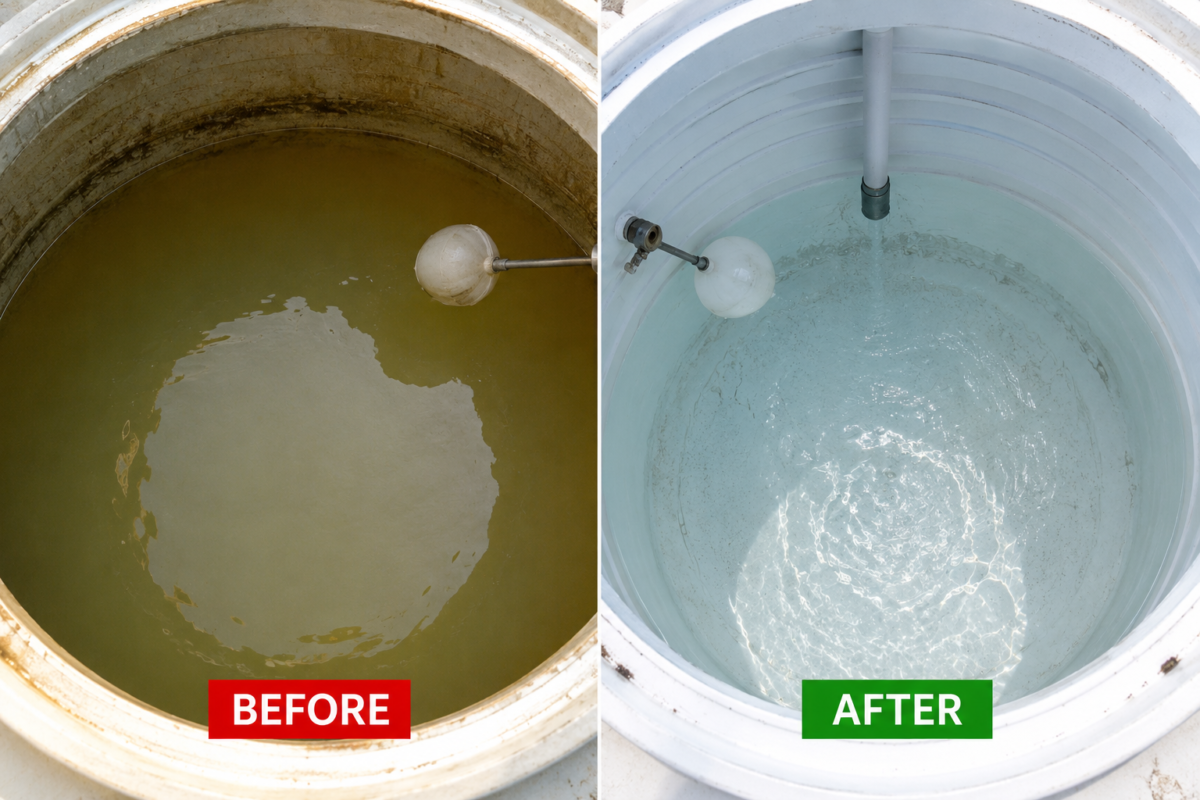
Quality Inspection
We confirm the tank meets hygiene standards before handoff.
Expert Tip: Always ask whether disinfection is included in the service — some low-cost providers skip this critical step.
How Often Should You Clean Your Water Tank?
| Setting | Recommended Frequency |
|---|---|
| Individual homes | Every 6 months |
| Apartments | Every 6 months |
| Housing societies | Every 3–6 months |
| Offices | Every 6 months |
| Schools | Every 3–4 months |
| Hospitals | Every 1–3 months |
| Hotels | Every 3 months |
| Restaurants | Every 3 months |
| Commercial buildings | Every 3–6 months |
Pro Tip: In Jabalpur, schedule cleaning right before the monsoon season to remove dust buildup, and again just after, to clear out runoff debris.
Water Tank Maintenance Tips
- Inspect your tank lid regularly to make sure it seals properly.
- Clean your tank at least every 6 months, more often for high-use buildings.
- Check for cracks or leaks during every inspection.
- Keep the area around the tank free from debris and standing water.
- Install a mesh filter on inlet pipes to reduce debris entry.
- Avoid placing tanks in direct, prolonged sunlight to reduce algae growth.
- Test water quality periodically, especially after heavy rains.
- Disinfect the tank after every cleaning, not just a rinse.
- Keep records of your last cleaning date for easy tracking.
- Check for insects or rodents near tank openings regularly.
- Ensure proper ventilation to prevent excess condensation.
- Address bad odor or discoloration immediately, not after weeks.
- Use a professional service for underground and hard-to-reach tanks.
- Clean overhead and underground tanks on the same maintenance schedule.
- Book cleaning ahead of monsoon season to prevent runoff contamination.
Why Choose Izak Home Services?
- Experienced Technicians — Trained in safe tank entry, cleaning, and disinfection.
- Modern Equipment — High-pressure jets and vacuum extraction systems.
- Eco-Friendly Cleaning — Safe disinfectants that don’t harm your drinking water.
- Affordable Pricing — Transparent quotes with no hidden charges.
- On-Time Service — We respect your schedule and building access needs.
- Safe Cleaning Process — Full inspection and disinfection every time.
- Residential & Commercial Water Tank Cleaning — From homes to hospitals and hotels.
- Trusted Local Company in Jabalpur — A growing base of satisfied clients.
- Customer Satisfaction — We’re not done until your water is safe and clear.
Areas We Serve
Izak Home Services proudly offers professional water tank cleaning across Jabalpur and the wider Madhya Pradesh region. This includes Cantonment Area, Vijay Nagar, Napier Town, Adhartal, Gwarighat, Sadar, and Ranjhi, along with nearby residential and commercial areas.
Frequently Asked Questions
1. Why is water tank cleaning important? It keeps your drinking water safe by removing sludge, bacteria, algae, and sediment that build up over time and can cause serious health risks.
2. How often should I clean my water tank? Most homes should clean their tank every 6 months. Schools, hospitals, and hotels need more frequent cleaning due to higher water usage.
3. Can dirty tanks cause diseases? Yes. Contaminated tank water is linked to typhoid, cholera, diarrhea, and other waterborne illnesses.
4. Is professional tank cleaning worth it? Yes. Professional cleaning includes full sludge removal and disinfection, which DIY methods often miss, especially in confined or underground tanks.
5. How long does cleaning take? Most residential tank cleanings take 1 to 3 hours, depending on tank size and contamination level.
6. What chemicals are used? Safe, approved disinfecting solutions are used to eliminate bacteria without leaving harmful residue in your drinking water.
7. Is drinking water safe immediately after cleaning? Yes, once the final rinse and disinfection process are complete, the tank is safe to refill and use.
8. How much does water tank cleaning cost in Jabalpur? Cost depends on your tank’s size, location, and condition. Contact us for a transparent, no-obligation quote.
9. Do apartments need regular tank cleaning? Yes. Shared tanks in apartments and housing societies often need cleaning every 3 to 6 months due to higher usage.
10. Can you clean underground tanks? Yes, our team is equipped and trained to safely clean both overhead and underground water tanks.
Internal Links
- Home: https://izakhomeservices.com/
- Kitchen Cleaning: https://izakhomeservices.com/kitchen-cleaning/
- Bathroom Cleaning: https://izakhomeservices.com/bathroom-cleaning/
- House Deep Cleaning: https://izakhomeservices.com/house-deep-cleaning/
- Sofa Cleaning: https://izakhomeservices.com/sofa-cleaning/
- Water Tank Cleaning: https://izakhomeservices.com/water-tank-cleaning/
- Contact Us: https://izakhomeservices.com/contact/
External Authority Links
World Health Organization (WHO):https://www.who.int/
Centers for Disease Control and Prevention (CDC):https://www.cdc.gov/
U.S. Food & Drug Administration (FDA):https://www.fda.gov/
UNICEF – Water, Sanitation and Hygiene:https://www.unicef.org/wash
Ready for Safer, Cleaner Water at Home?
You don’t have to guess what’s building up inside your tank. If it’s been more than 6 months since your last cleaning, it’s time to act.
Book your professional water tank cleaning in Jabalpur today.
📞 Call us: 09713613207 🌐 Visit: izakhomeservices.com
Call today for safer, cleaner water your family can trust.