
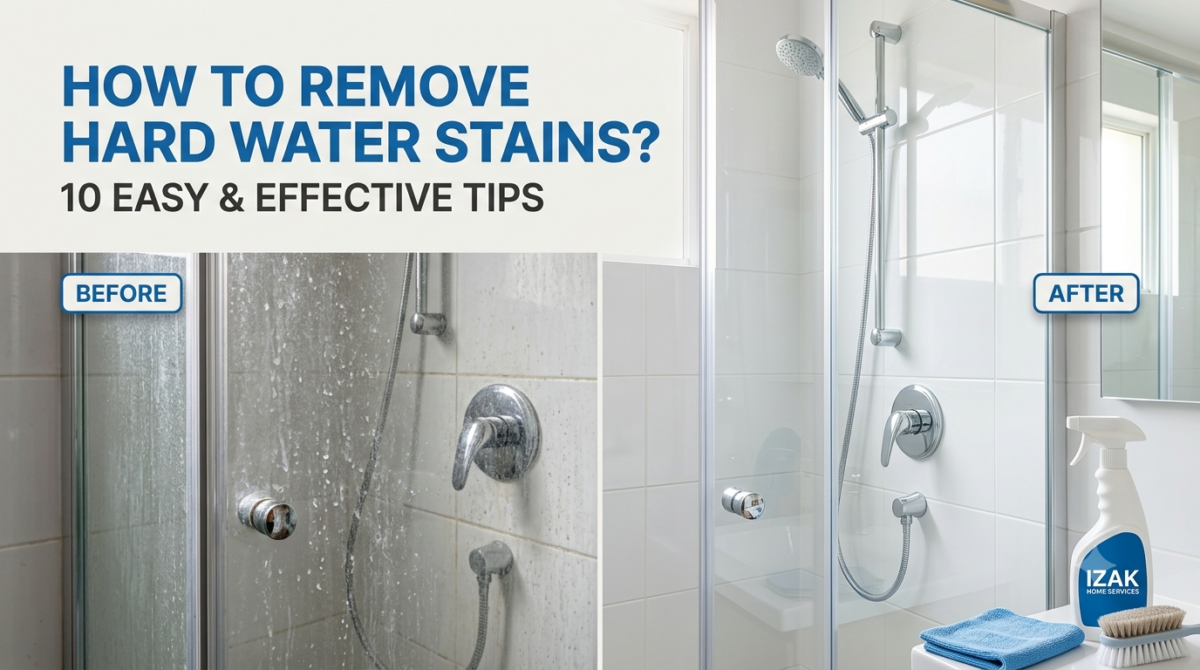
How to remove hard water stains: use vinegar, baking soda, or professional descaling to clear limescale from glass, taps, tiles, and showerheads.
How to Remove Hard Water Stains: 10 Easy & Effective Tips
You wipe down your shower glass. A day later, those cloudy white marks are back.
That’s hard water for you. It leaves behind mineral deposits every time water dries on a surface, and normal wiping just doesn’t cut it.
In this guide, you’ll learn exactly what hard water stains are, why they form, and how to remove them from every surface in your home — from shower glass to kitchen taps. We’ll also cover when it’s time to call in professional help.
Many homes in Jabalpur deal with this same recurring issue, wherever water leaves visible mineral residue on a surface. This guide covers the practical fix, without making claims about specific local water conditions.
Table of Contents
- What Are Hard Water Stains?
- Why Do Hard Water Stains Form?
- Where Are Hard Water Stains Commonly Found?
- How to Remove Hard Water Stains at Home
- How to Remove Hard Water Stains From Different Surfaces
- Hard Water Stains vs Limescale
- Health and Hygiene Concerns
- Signs Your Hard Water Stains Need Professional Cleaning
- DIY vs Professional Cleaning
- Professional Bathroom Deep Cleaning Process
- How Often Should You Remove Hard Water Stains?
- 15 Tips to Prevent Hard Water Stains
- Common Cleaning Mistakes to Avoid
- Why Choose Izak Home Services?
- Areas We Serve
- Frequently Asked Questions
What Are Hard Water Stains?
Featured Snippet Answer: Hard water stains are white, chalky, or cloudy marks left behind when water containing dissolved minerals — mainly calcium and magnesium — evaporates on a surface. They commonly form on glass, taps, tiles, and showerheads and can harden into limescale over time.
These marks aren’t dirt. They’re mineral residue.
When mineral-rich water dries, the water evaporates but the minerals stay behind. That residue builds up layer by layer if it isn’t cleaned regularly.
Hard Water Stains vs Soap Scum vs Rust Stains vs Mold
| Type | Appearance | Cause |
|---|---|---|
| Hard water stains | White, chalky, or cloudy | Mineral deposits from evaporated water |
| Soap scum | Filmy, dull residue | Soap combined with minerals |
| Rust stains | Reddish-brown | Iron in water or corroding fixtures |
| Mold | Black, green, or pink spots | Fungal growth in damp areas |
Why Do Hard Water Stains Form?
Hard water stains form for a simple reason: mineral-rich water dries on a surface, and the minerals get left behind.
A few common causes make this worse:
- Water droplets left to air-dry instead of being wiped
- Poor bathroom ventilation, which slows drying
- Infrequent cleaning, allowing deposits to build up
- Water left standing in sinks or on countertops
- Soap combining with minerals to form a sticky film
- Old deposits hardening the longer they’re left untouched
Example: A shower glass wiped dry after every use rarely develops heavy staining. The same glass left to air-dry every day can develop a cloudy film within a few weeks.
Where Are Hard Water Stains Commonly Found?
Hard water stains show up almost anywhere water regularly touches a surface:
- Bathroom glass doors and shower glass
- Bathroom taps and showerheads
- Chrome fixtures and stainless steel
- Washbasins and bathroom tiles
- Toilet bowls
- Kitchen sinks, taps, and faucets
- Mirrors and windows
- Ceramic surfaces
- Granite and stone surfaces
- Other water fixtures
Different surfaces need different care. A method that’s safe on glass can damage natural stone.
How to Remove Hard Water Stains at Home
Method 1: White Vinegar Solution
White vinegar is acidic, which helps dissolve mineral deposits.
Soak a cloth in undiluted white vinegar. Lay it directly on the stained area. Let it sit for 15 to 30 minutes.
Scrub gently, then rinse thoroughly with water. Dry with a microfiber cloth.
Safety warning: Never use vinegar on natural stone like marble, granite, or limestone — the acid can etch and permanently damage these surfaces.
Method 2: Vinegar and Water Spray
This is a gentler option for lighter buildup.
Mix equal parts white vinegar and water in a spray bottle. Spray the stained surface. Wait 10 to 15 minutes.
Scrub lightly with a soft sponge, then rinse and dry completely.
Method 3: Lemon-Based Cleaning
Lemon juice works similarly to vinegar but is gentler.
Rub a cut lemon directly on light mineral deposits, or apply lemon juice with a cloth. Let it sit for a few minutes, then rinse.
Limitation: Lemon is best for light residue only. Heavier limescale usually needs a stronger method.
Method 4: Baking Soda for Stubborn Residue
Baking soda adds gentle abrasion to help lift stubborn residue.
Make a paste with baking soda and a small amount of water. Apply to the stain and let sit for 15 to 20 minutes. Scrub gently and rinse.
Important: Never mix random household chemicals together, especially bleach with any acidic cleaner. This can create dangerous fumes.
Method 5: Commercial Limescale Cleaner
Commercial cleaners can help with heavier buildup.
Always read the label first. Wear gloves and ensure good ventilation. Check that the product is safe for your specific surface — some formulas can damage chrome or stone finishes.
Rinse thoroughly after use, following the manufacturer’s contact time instructions.
Method 6: Professional Descaling and Deep Cleaning
Some situations call for professional help rather than DIY.
This includes old, hardened stains, heavy limescale, large or multiple bathrooms, and commercial properties like hotels, offices, hospitals, restaurants, and housing societies. These settings often have more surface area and stricter hygiene expectations than a single home bathroom.
How to Remove Hard Water Stains From Different Surfaces
From Glass
Shower glass, glass doors, and windows respond well to a vinegar and water spray. Let it sit for 10 to 15 minutes, then wipe in circular motions with a microfiber cloth to avoid streaking.
From Bathroom Taps
Chrome taps and shower fixtures handle diluted vinegar well. Wrap a vinegar-soaked cloth around the fixture, let it sit for 15 minutes, then scrub gently and dry.
From Showerheads
Mineral deposits often block the small holes in a showerhead. Soak the showerhead in a vinegar solution for 30 minutes to loosen buildup, then rinse thoroughly before reinstalling.
From Tiles
Ceramic and porcelain tiles generally tolerate a diluted vinegar solution well. Be cautious with grout, since vinegar can wear down grout over repeated use — spot test first.
From Toilet Bowls
Mineral rings and brownish deposits respond to vinegar poured directly into the bowl. Let it sit for at least an hour for stubborn rings, then scrub with a toilet brush and flush.
From Sinks
Washbasins, kitchen sinks, and faucets can be treated the same way as taps — a soaked cloth or spray, short contact time, then a thorough rinse.
From Stainless Steel
Wipe in the direction of the grain to avoid visible streaking. Dry immediately after cleaning to prevent new spots from forming.
From Mirrors
Apply a vinegar and water spray directly to the mirror, avoiding the edges where moisture can seep behind the glass and damage the backing.
Hard Water Stains vs Limescale
| Feature | Hard Water Stains | Limescale |
|---|---|---|
| Appearance | White/cloudy marks | Thick chalky deposits |
| Cause | Mineral deposits | Heavy calcium buildup |
| Common Areas | Glass, taps, tiles | Taps, pipes, showerheads |
| Cleaning Difficulty | Light to moderate | Moderate to heavy |
| Professional Cleaning | Sometimes needed | Often useful |
Health and Hygiene Concerns
Hard water stains themselves are mainly a mineral buildup issue, not a direct health hazard.
That said, neglected surfaces can also collect soap residue, dirt, organic debris, biofilm, and bacteria from general environmental contamination. This is why keeping bathroom and kitchen surfaces clean matters for overall household hygiene, not just appearance.
The World Health Organization notes that maintaining clean household surfaces supports better overall hygiene. The EPA also highlights the importance of regular surface cleaning as part of healthy indoor environments.
This section is for general awareness only and is not medical advice.
Signs Your Hard Water Stains Need Professional Cleaning
Thick white deposits: This means mineral buildup has hardened over time. Try a stronger vinegar soak at home first. If the deposit doesn’t budge, call a professional.
Stains returning quickly: If a surface stains again within days of cleaning, the buildup underneath likely needs deeper treatment.
Cloudy shower glass: Light film often responds to vinegar. Deep, permanent-looking cloudiness usually needs professional descaling.
Tap surface covered with scale: Heavy scale on taps can be hard to fully remove without proper tools.
Showerhead holes blocked: A vinegar soak helps mild blockages. Fully clogged holes often need professional descaling or fixture replacement.
Toilet mineral rings: Persistent rings that survive scrubbing usually mean hardened limescale below the waterline.
Stains that remain after regular cleaning: If your usual routine stops working, the deposit has likely thickened.
Large bathroom areas affected: Widespread staining across many surfaces is faster and safer to treat professionally.
Multiple bathrooms need cleaning: For time efficiency, a professional team can treat several bathrooms in one visit.
Surface looks permanently dull: This can mean the surface has been etched or degraded, which professional restoration may help address.
DIY vs Professional Cleaning
| Factor | DIY Cleaning | Professional Cleaning |
|---|---|---|
| Cleaning quality | Good for light to moderate buildup | Thorough, even on heavy limescale |
| Equipment | Basic household tools | Professional-grade descaling tools |
| Time required | Can take hours for heavy buildup | Faster with the right equipment |
| Heavy limescale removal | Often limited | Handles thick, hardened deposits |
| Glass cleaning | Effective for light stains | Restores heavily clouded glass |
| Tap cleaning | Works for regular maintenance | Better for corroded or heavily scaled taps |
| Large-area cleaning | Time-consuming | Efficient for whole bathrooms |
| Safety | Risk of surface damage without care | Surface-appropriate, tested methods |
| Convenience | Requires your own time and effort | Scheduled and handled for you |
| Long-term value | Ongoing manual effort | Longer-lasting, professional-grade results |
| Cost | Lower upfront | Affordable and time-saving overall |
Professional Bathroom Deep Cleaning Process
Here’s what a full bathroom deep cleaning from Izak Home Services looks like.
- Inspection — Identify surface type, mineral buildup, limescale, soap scum, rust, and grout condition.
- Surface Identification — Confirm whether the surface is glass, ceramic, porcelain, stainless steel, chrome, stone, marble, or granite.
- Dry Dust and Dirt Removal — Loose debris is cleared before any liquid treatment.
- Pre-Treatment — A suitable solution is applied based on the surface and buildup level.
- Descaling — Mineral deposits are broken down using surface-appropriate methods.
- Scrubbing — Manual scrubbing targets stubborn spots without damaging the finish.
- Machine-Assisted Cleaning Where Suitable — Used for larger areas or heavier buildup.
- Rinsing — All cleaning residue is thoroughly rinsed away.
- Sanitization Where Appropriate — High-touch surfaces are sanitized.
- Drying — Surfaces are dried to prevent new spots from forming.
- Final Inspection — We confirm the results with you before finishing.
This process restores the appearance of heavily affected surfaces while using methods appropriate for each material.
How Often Should You Remove Hard Water Stains?
| Area | Recommended Maintenance |
|---|---|
| Bathroom taps | Weekly |
| Shower glass | Weekly |
| Washbasin | Several times per week |
| Showerhead | Monthly inspection |
| Bathroom tiles | Weekly |
| Toilet | Regular cleaning |
| Kitchen sink | Daily/regular |
| Deep descaling | As needed |
| Professional bathroom cleaning | Every few months or as required |
Frequency depends on water hardness, usage, ventilation, and surface condition — homes with heavier daily use may need more frequent attention.
15 Tips to Prevent Hard Water Stains
- Wipe water off surfaces after showering.
- Use a squeegee on glass after every shower.
- Dry taps after use instead of letting them air-dry.
- Clean water spots quickly, before they harden.
- Keep bathroom ventilation good to speed up drying.
- Clean showerheads regularly to prevent blockage.
- Don’t allow water to stand in sinks or basins.
- Clean sinks frequently, especially kitchen sinks.
- Follow product instructions on any cleaner you use.
- Test cleaners on a small, hidden area first.
- Avoid abrasive scrubbing on delicate surfaces.
- Never mix different cleaning chemicals together.
- Maintain grout regularly to prevent staining.
- Schedule periodic deep cleaning before buildup gets heavy.
- Call professionals for severe or long-standing buildup.
Common Cleaning Mistakes to Avoid
Mistake 1: Using too much cleaning chemical. More product doesn’t mean better results — it just means more residue to rinse.
Mistake 2: Leaving acidic cleaners on surfaces too long. This can damage grout, metal, and stone finishes.
Mistake 3: Using abrasive scrubbers on delicate finishes. This can scratch glass, chrome, and stone permanently.
Mistake 4: Mixing different cleaning chemicals. Combining products like bleach and acidic cleaners can create dangerous fumes.
Mistake 5: Ignoring surface manufacturer instructions. Some finishes need specific, gentler care.
Mistake 6: Cleaning without gloves or ventilation. This increases exposure to fumes and skin irritation.
Mistake 7: Only cleaning visible stains. Buildup often starts before it’s visible.
Mistake 8: Allowing water spots to dry repeatedly. Each cycle adds another layer of mineral residue.
Why Choose Izak Home Services?
- Experienced Technicians — Trained to identify surface type before choosing a cleaning method.
- Professional Cleaning Equipment — Tools built for descaling and deep restoration.
- Appropriate Cleaning Products — Matched to glass, chrome, ceramic, and stone surfaces.
- Safe Cleaning Methods — No unsafe chemical mixing, ever.
- Affordable Pricing — Transparent quotes with no hidden charges.
- On-Time Service — We respect your schedule.
- Bathroom Deep Cleaning — Full descaling and restoration for every surface.
- Kitchen Cleaning — Tap, sink, and countertop descaling included.
- Glass Cleaning — Streak-free, mineral-free results.
- Residential Cleaning — For homes, apartments, and villas.
- Commercial Cleaning — For hotels, offices, hospitals, restaurants, and housing societies.
- Trusted Local Cleaning Company in Jabalpur — A growing base of satisfied clients.
- Customer Satisfaction — We’re not done until your surfaces look right.
Learn more about our Professional House Deep Cleaning and Kitchen Deep Cleaning Services.
Areas We Serve
Izak Home Services proudly offers hard water stain removal and bathroom deep cleaning across Jabalpur and the wider Madhya Pradesh region. This includes Cantonment Area, Vijay Nagar, Napier Town, Adhartal, Gwarighat, Sadar, and Ranjhi, along with nearby residential and commercial areas.
Mineral deposits can become a recurring household cleaning issue wherever water leaves visible residue on a surface — regardless of neighborhood. Our team provides Bathroom Cleaning in Jabalpur and Bathroom Deep Cleaning Jabalpur services to help keep these surfaces looking their best.
Tired of Hard Water Stains?
If white marks, limescale, cloudy glass, and mineral deposits are making your bathroom look old and dirty, professional cleaning can help restore the surface.
Izak Home Services provides Professional Cleaning Services in Jabalpur and nearby areas.
📞 Call Now: 09713613207 🌐 Website: izakhomeservices.com
Internal Links
- Home: https://izakhomeservices.com/
- Kitchen Cleaning: https://izakhomeservices.com/kitchen-cleaning/
- Bathroom Cleaning: https://izakhomeservices.com/bathroom-cleaning/
- House Deep Cleaning: https://izakhomeservices.com/house-deep-cleaning/
- Sofa Cleaning: https://izakhomeservices.com/sofa-cleaning/
- Water Tank Cleaning: https://izakhomeservices.com/water-tank-cleaning/
- Contact Us: https://izakhomeservices.com/contact/
External Authority Links
World Health Organization (WHO):https://www.who.int/
Centers for Disease Control and Prevention (CDC):https://www.cdc.gov/
U.S. Food & Drug Administration (FDA):https://www.fda.gov/
UNICEF – Water, Sanitation and Hygiene:https://www.unicef.org/wash
Frequently Asked Questions
1. How do you remove hard water stains naturally?
White vinegar and lemon juice are the most common natural options. Apply, let sit for 10 to 30 minutes, then scrub gently and rinse.
2. What is the fastest way to remove hard water stains?
For light stains, a vinegar and water spray with a short wait time works quickly. For heavy buildup, a commercial limescale cleaner or professional descaling is faster.
3. How do you remove hard water stains from glass?
Spray a vinegar and water solution on the glass, let it sit for 10 to 15 minutes, then wipe in circular motions with a microfiber cloth.
4. How do you remove limescale from bathroom taps?
Wrap a vinegar-soaked cloth around the tap, let it sit for 15 to 30 minutes, then scrub gently and rinse thoroughly.
5. Can vinegar remove hard water stains?
Yes, on most surfaces like glass, chrome, and ceramic. Avoid using it on natural stone, as the acid can cause permanent etching.
6. How do you remove old hard water stains?
Older, hardened stains often need a longer soak time or a commercial descaling product. Very old, thick buildup may need professional treatment.
7. Can hard water stains damage bathroom fixtures?
Yes, over time, heavy limescale can affect the function of showerheads and taps, and prolonged buildup can dull or degrade certain finishes.
8. How do you prevent hard water stains?
Wipe surfaces dry after use, use a squeegee on glass, and clean regularly instead of letting deposits build up over time.
9. When should I hire a professional cleaner for hard water stains?
When stains are old, widespread, keep returning quickly, or affect delicate surfaces like natural stone that need careful handling.
10. How much does bathroom deep cleaning cost in Jabalpur?
Cost depends on your bathroom’s size, surface types, and condition. Contact us for a transparent, no-obligation quote.
People Also Ask
Does baking soda remove hard water stains? Yes, especially when combined with a short soak time, baking soda’s mild abrasiveness helps lift stubborn residue without scratching most surfaces.
Does lemon remove limescale? Lemon juice can help with light limescale, but heavier buildup usually needs a stronger method like vinegar or a commercial descaler.
Why do bathroom taps get white deposits? White deposits form when mineral-rich water dries directly on the tap surface, leaving calcium and magnesium residue behind.
Can old hard water stains be removed? Many old stains can be significantly reduced with a longer soak time or professional descaling, though results depend on how long the deposit has hardened.
How often should bathroom surfaces be descaled? Light daily surfaces like taps and glass benefit from weekly attention, while a full professional descaling every few months keeps buildup from becoming severe.
Ready for a Bathroom Free of Hard Water Stains?
You don’t need to keep fighting the same cloudy glass and stained taps every week. Let the experts at Izak Home Services handle the deep work.
Book your professional bathroom cleaning in Jabalpur today.
📞 Call us: 09713613207 🌐 Visit: izakhomeservices.com
Book your professional bathroom cleaning today and give your bathroom a cleaner, fresher look.