
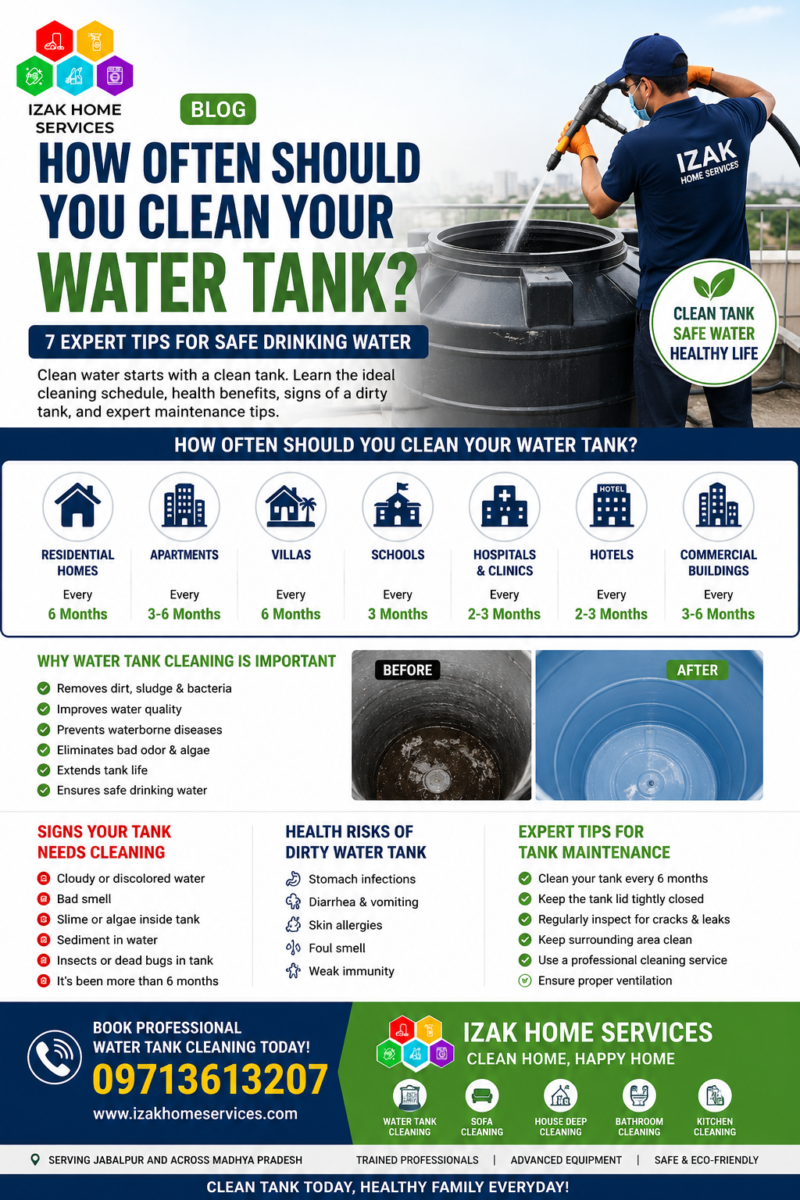
Wondering how often you should clean your water tank? Learn the ideal cleaning schedule, health risks of dirty tanks, expert maintenance tips, FAQs, and why professional water tank cleaning in Jabalpur is essential. How Often Should You Clean Your Water Tank? 7 Expert Tips for Safe Drinking Water.
How Often Should You Clean Your Water Tank? 7 Expert Tips for Safe Drinking Water
Clean water is one of the most important requirements for a healthy family. However, many homeowners regularly purify their drinking water but completely forget about the place where that water is stored—the water tank.
Whether you use an overhead water tank or an underground storage tank, dirt, sludge, bacteria, algae, rust, and other contaminants gradually build up over time. Even if your water looks clean, harmful microorganisms may still be present inside the tank.
One of the most common questions homeowners ask is:
How often should you clean your water tank?
The short answer is every 6 months for most residential homes. However, the ideal cleaning frequency depends on several factors, including water quality, tank size, location, weather, family size, and usage.
In this complete guide, you’ll learn the recommended cleaning schedule, health risks of dirty tanks, warning signs that your tank needs cleaning, professional cleaning methods, maintenance tips, and answers to the most frequently asked questions.
Why Water Tank Cleaning Is So Important
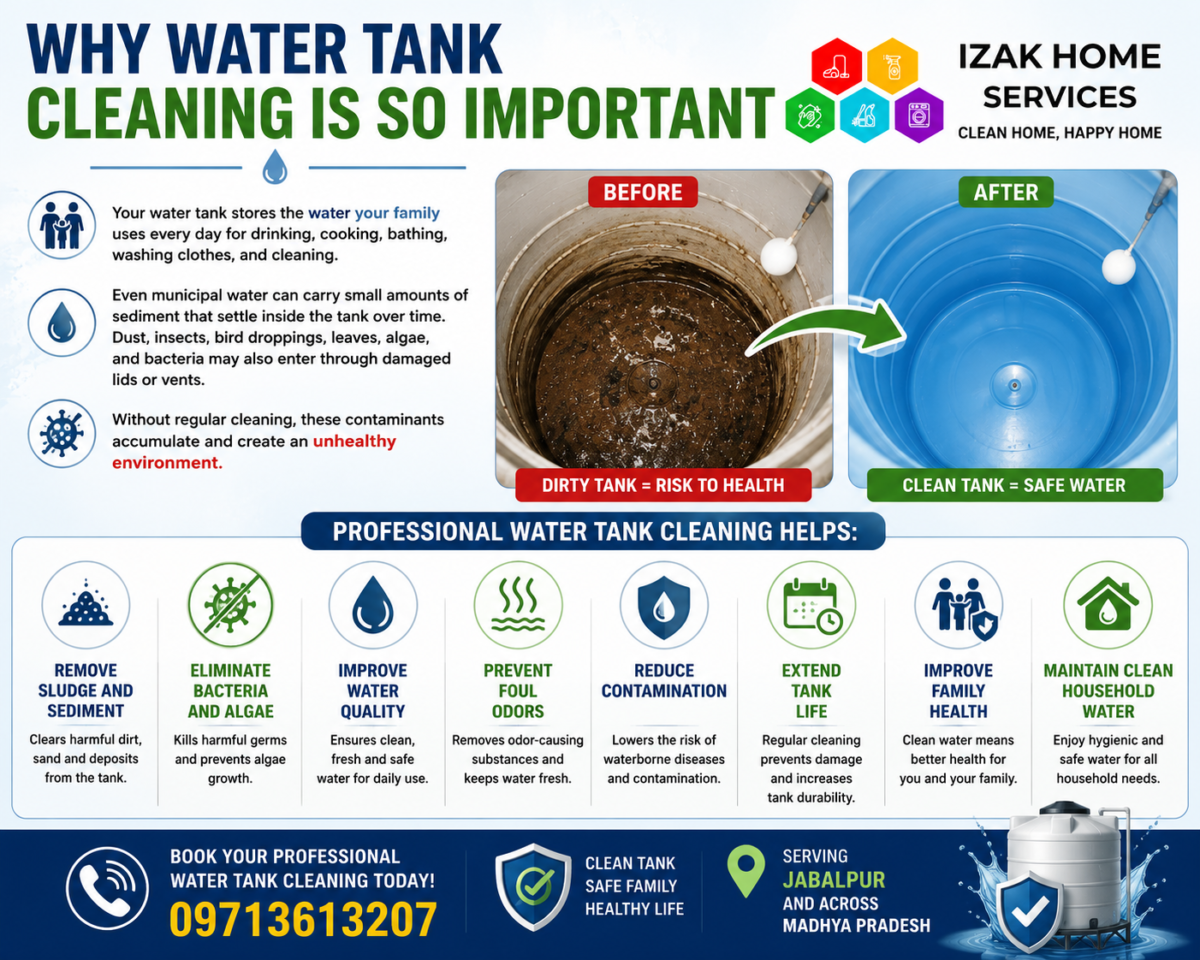
Your water tank stores the water your family uses every day for drinking, cooking, bathing, washing clothes, and cleaning.
Even municipal water can carry small amounts of sediment that settle inside the tank over time. Dust, insects, bird droppings, leaves, algae, and bacteria may also enter through damaged lids or vents.
Without regular cleaning, these contaminants accumulate and create an unhealthy environment.
Professional water tank cleaning helps:
- Remove sludge and sediment
- Eliminate bacteria and algae
- Improve water quality
- Prevent foul odors
- Reduce contamination
- Extend tank life
- Improve family health
- Maintain clean household water
How Often Should You Clean Your Water Tank? 7 Expert Tips for Safe Drinking Water
The ideal schedule depends on the type of property.
| Property Type | Recommended Cleaning |
|---|---|
| Residential homes | Every 6 months |
| Apartments | Every 3–6 months |
| Villas | Every 6 months |
| Schools | Every 3 months |
| Hospitals | Every 2–3 months |
| Hotels | Every 2–3 months |
| Restaurants | Every 3 months |
| Commercial buildings | Every 3–6 months |
If your area experiences frequent water supply interruptions, muddy water, or heavy rainfall, more frequent cleaning may be necessary.
What Happens If You Never Clean Your Water Tank?
A neglected water tank becomes an ideal environment for contaminants.
Common problems include:
- Sludge buildup
- Sand deposits
- Rust particles
- Algae growth
- Biofilm formation
- Mosquito breeding
- Bad odor
- Cloudy water
- Bacterial contamination
- Mold growth
Over time, these issues may affect water quality and increase maintenance costs.
Health Risks of a Dirty Water Tank
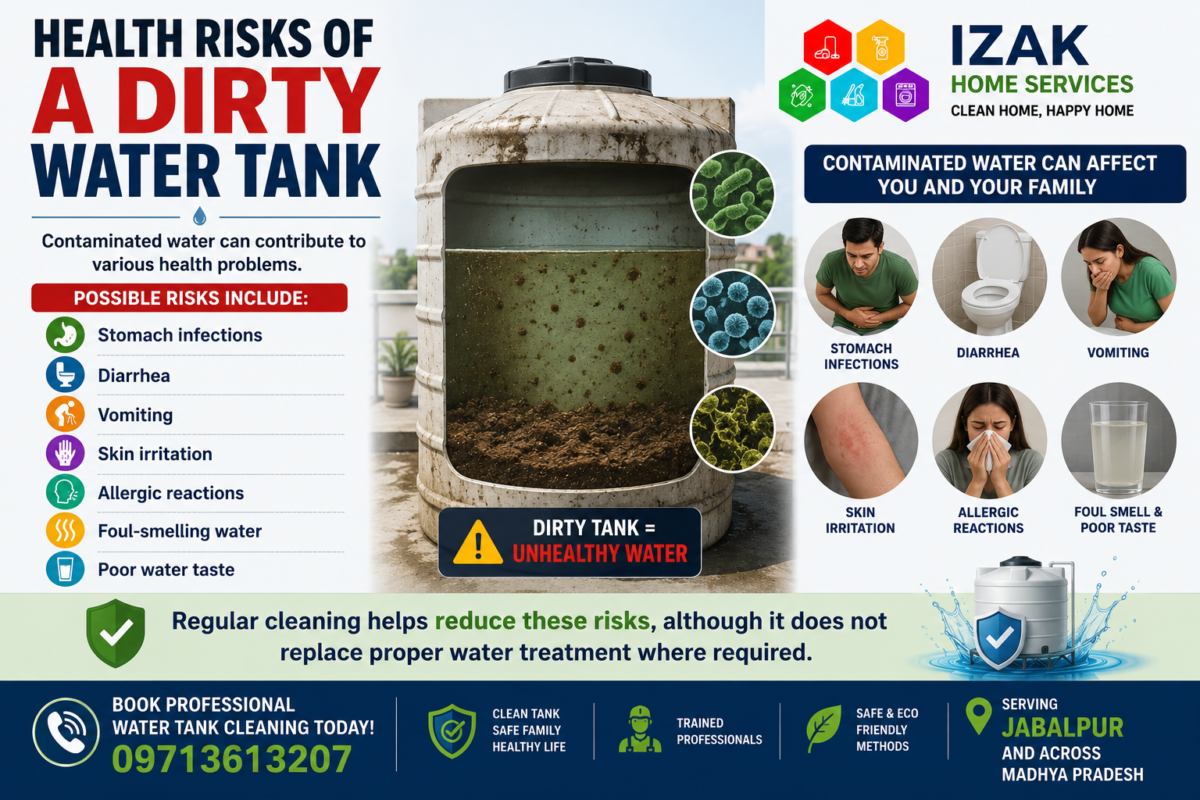
Contaminated water can contribute to various health problems.
Possible risks include:
- Stomach infections
- Diarrhea
- Vomiting
- Skin irritation
- Allergic reactions
- Foul-smelling water
- Poor water taste
Regular cleaning helps reduce these risks, although it does not replace proper water treatment where required.
Signs Your Water Tank Needs Cleaning
Don’t wait for your tank to become visibly dirty.
Watch for these warning signs:
- Water smells unusual
- Water appears cloudy
- Sediment in buckets
- Green algae inside the tank
- Slimy walls
- Insects inside the tank
- Rust-colored water
- Slow water flow due to sediment
- Dirty tank lid
- More than six months since the last cleaning
Factors That Affect Cleaning Frequency
Several conditions determine how often your tank should be cleaned.
1. Water Source
Borewell water usually contains more minerals and sediment than treated municipal water.
2. Family Size
Larger families use more water, increasing sediment movement and contamination risk.
3. Tank Material
Plastic, concrete, and steel tanks each require proper maintenance.
4. Weather Conditions
Hot weather encourages algae growth, while monsoons may introduce additional contaminants.
5. Tank Location
Outdoor tanks collect more dust and debris than indoor installations.
Professional Water Tank Cleaning Process
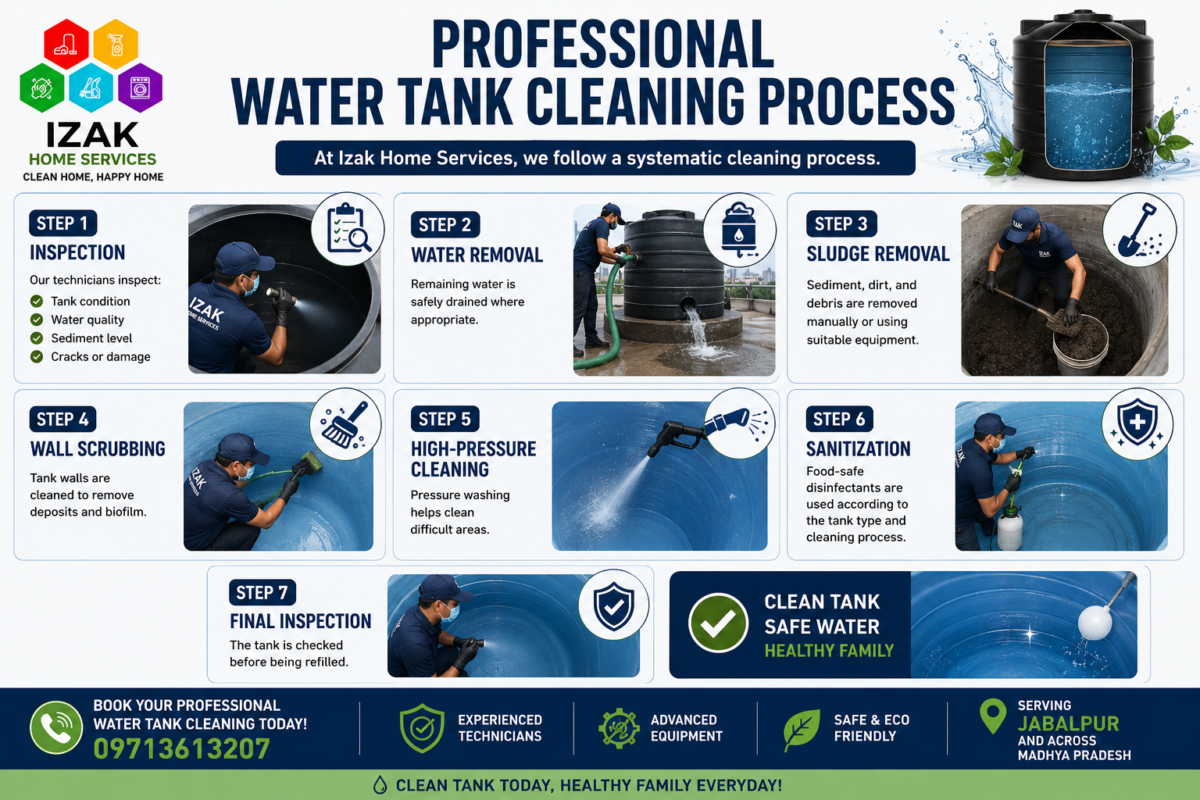
At Izak Home Services, we follow a systematic cleaning process.
Step 1 – Inspection
Our technicians inspect:
- Tank condition
- Water quality
- Sediment level
- Cracks or damage
Step 2 – Water Removal
Remaining water is safely drained where appropriate.
Step 3 – Sludge Removal
Sediment, dirt, and debris are removed manually or using suitable equipment.
Step 4 – Wall Scrubbing
Tank walls are cleaned to remove deposits and biofilm.
Step 5 – High-Pressure Cleaning
Pressure washing helps clean difficult areas.
Step 6 – Sanitization
Food-safe disinfectants are used according to the tank type and cleaning process.
Step 7 – Final Inspection
The tank is checked before being refilled.
Benefits of Professional Water Tank Cleaning
Professional cleaning offers several advantages.
- Cleaner stored water
- Better hygiene
- Reduced odors
- Longer tank life
- Removal of sludge
- Improved water quality
- Time-saving process
- Proper cleaning equipment
- Experienced technicians
- Peace of mind
DIY vs Professional Water Tank Cleaning
Many homeowners try cleaning tanks themselves.
However, professional cleaning provides:
- Specialized equipment
- Safer cleaning methods
- Better sludge removal
- Thorough inspection
- Faster completion
- Proper sanitization
For larger or underground tanks, professional cleaning is generally more practical and effective.
Water Tank Maintenance Tips
Keep your tank cleaner for longer by following these tips:
- Keep the lid tightly closed.
- Repair cracks promptly.
- Inspect the tank every month.
- Remove visible debris.
- Check overflow pipes regularly.
- Clean surrounding areas.
- Prevent mosquito entry.
- Schedule professional cleaning every six months.
Why Choose Izak Home Services?
If you’re searching for professional Water Tank Cleaning in Jabalpur, Izak Home Services provides reliable cleaning solutions for homes and businesses.
Why customers choose us:
- Trained professionals
- Modern equipment
- Hygienic cleaning process
- Transparent pricing
- Timely service
- Friendly support
- Residential and commercial cleaning
- Local expertise in Jabalpur
Internal Links
Home: https://izakhomeservices.com/
Water Tank Cleaning Service: https://izakhomeservices.com/water-tank-cleaning/
House Deep Cleaning: https://izakhomeservices.com/house-deep-cleaning/
Bathroom Cleaning: https://izakhomeservices.com/bathroom-cleaning/
Kitchen Cleaning: https://izakhomeservices.com/kitchen-cleaning/
Sofa Cleaning: https://izakhomeservices.com/sofa-cleaning/
Contact Us: https://izakhomeservices.com/contact/
External Authority Links
Support your content with trusted resources:
- World Health Organization (WHO): https://www.who.int/
- Centers for Disease Control and Prevention (CDC): https://www.cdc.gov/
- UNICEF – Water, Sanitation and Hygiene: https://www.unicef.org/wash
Frequently Asked Questions
1. How often should I clean my residential water tank?
Most homes should clean their water tanks every six months.
2. Is once a year enough?
In many cases, cleaning every six months is a better preventive practice, especially in dusty areas or where water quality varies.
3. Can I clean my water tank myself?
Small tanks may be cleaned by homeowners, but larger or underground tanks often require professional equipment for effective cleaning.
4. How long does professional cleaning take?
Most residential tanks can be cleaned in about 1–2 hours, depending on size and condition.
5. Does tank cleaning remove bacteria?
Professional cleaning and sanitization significantly reduce contamination, though ongoing water quality also depends on the source and storage conditions.
6. What are the signs of a dirty water tank?
Cloudy water, unpleasant odors, visible sediment, algae, insects, and slime are common indicators.
7. Is cleaning safe for plastic tanks?
Yes. Appropriate cleaning methods are selected based on the tank material.
8. How much does water tank cleaning cost in Jabalpur?
The cost depends on the tank size, accessibility, and condition. Contact Izak Home Services for a customized quote.
9. Why does my water smell bad?
Odors may be caused by bacteria, algae, stagnant water, or accumulated organic matter inside the tank.
10. Why should I hire professionals?
Professionals use suitable equipment, follow systematic cleaning procedures, and help ensure the tank is cleaned thoroughly and safely.
Conclusion
A clean water tank is essential for maintaining better water quality and protecting your family’s health. While many people focus on water purifiers, the storage tank itself is often overlooked. Regular cleaning every six months helps remove sludge, sediment, algae, and bacteria before they become serious problems.
Whether you own a home, apartment, office, school, clinic, hotel, or commercial property, preventive maintenance is always more cost-effective than dealing with contaminated water or damaged tanks.
If you’re wondering How Often Should You Clean Your Water Tank?, the safest approach for most households is to schedule a professional cleaning every six months and inspect your tank regularly between cleanings.
Book Professional Water Tank Cleaning in Jabalpur Today
Protect your family’s health with clean, hygienic water storage.
Izak Home Services offers professional water tank cleaning for homes, apartments, offices, schools, hotels, clinics, and commercial buildings across Jabalpur.
Book your service today and enjoy cleaner water, a healthier home, and complete peace of mind.
Visit: https://izakhomeservices.com